I recently ran my first internal workshop on Technical Excellence in Sales — covering the presale and discovery process from a solution architect's perspective. The workshop went well (and that's a story for another post), but it left me wanting to go deeper.
So I turned to Google's NotebookLM to keep learning — and the results surprised me.
The Flow
1. Feed the context. I uploaded everything I had into NotebookLM — lecture transcripts, PDF presentations, internal materials from the workshop.
2. Learn through Mind Maps. NotebookLM helped me map out the entire domain visually — from NFRs and the C4 Model to risk frameworks and proposal artifacts. Instead of re-reading slides, I was navigating a connected knowledge graph.
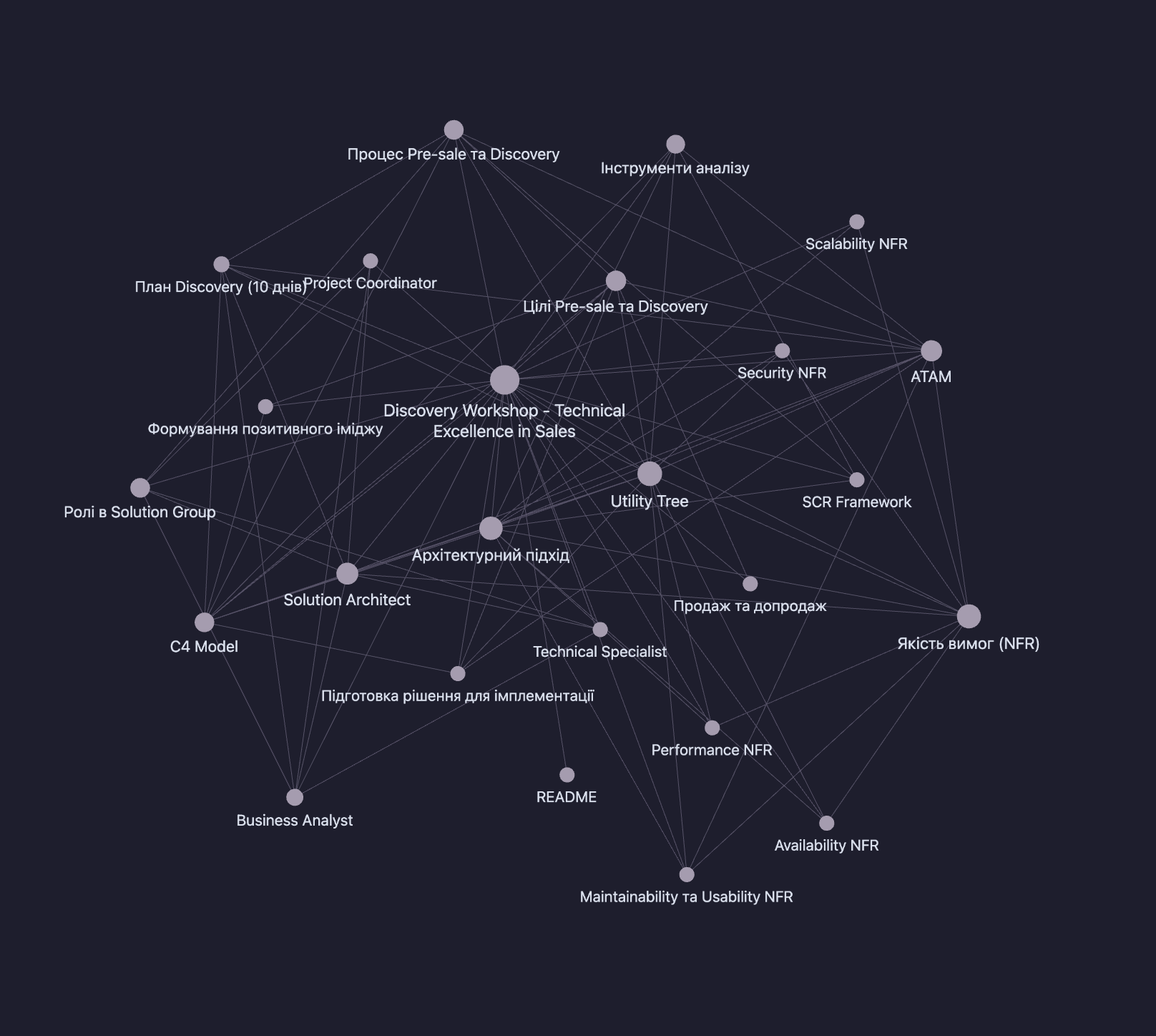
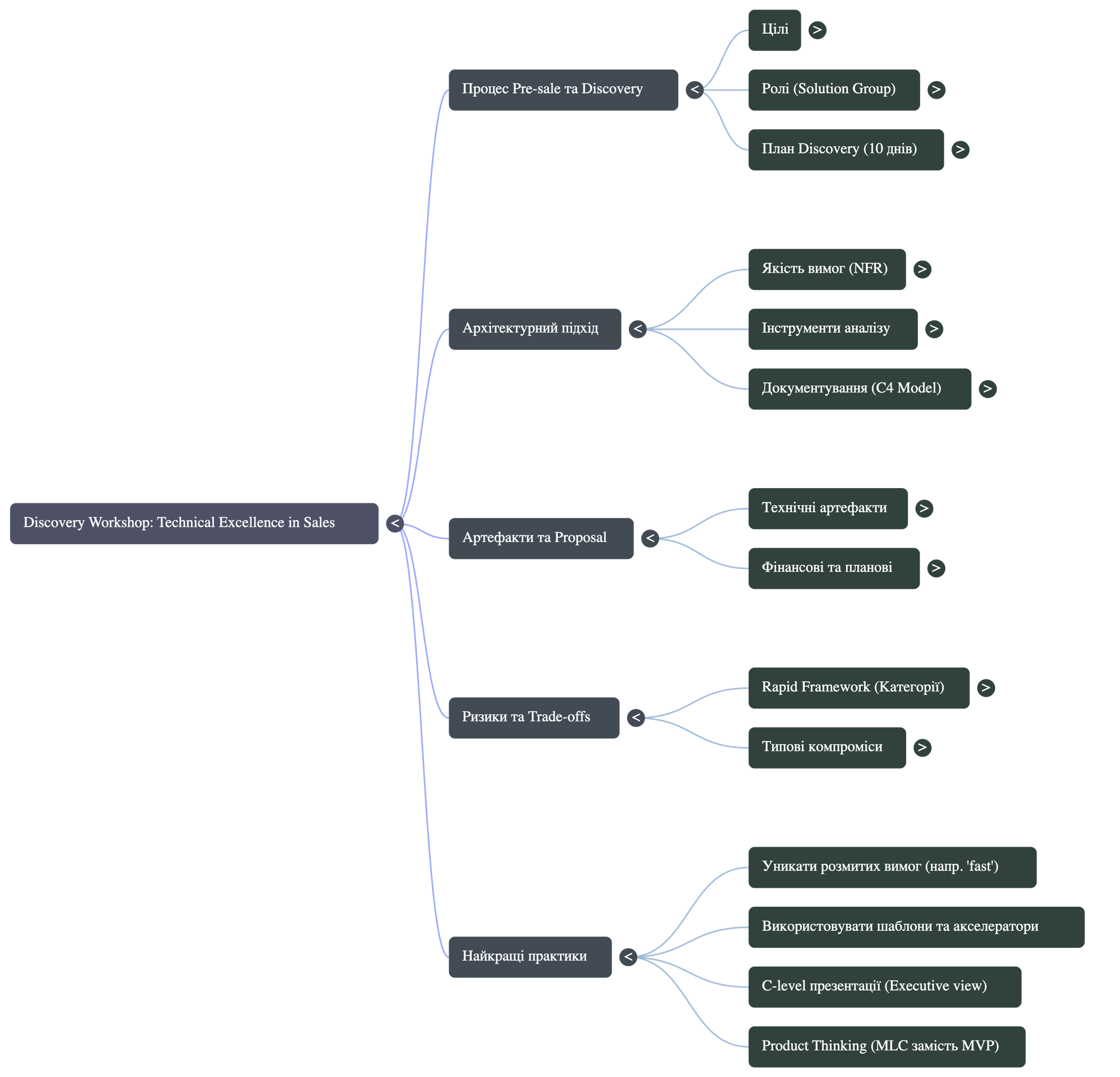
3. Create structured notes. With the full picture in front of me, I started distilling notes by topic — turning scattered materials into organized, retrievable knowledge.
The Result
Two things came out of this that I didn't expect:
Systematic knowledge. Not just "I read about this" — but a bird's-eye view of every topic in the domain and how they connect. You stop learning in fragments and start seeing the whole map.
A reusable knowledge base. An artifact I can return to anytime — or feed into Claude or another AI tool when I need to work with this context again. The learning compounds instead of fading.
Why This Matters
Most of us consume tons of professional content — talks, courses, PDFs, internal docs. But without structure, it evaporates. NotebookLM turned a pile of materials into something I can actually think with.
If you're deep in a domain and want to move from "I've seen this" to "I understand this" — try feeding your materials into NotebookLM. The mind map alone is worth it.